A real inspection, not guesswork
We look for the moisture source, the extent of affected materials, and what is hidden in adjacent cavities. The scope comes from conditions on site, not a one-size checklist.
Serving Portland, Oregon & surrounding areas
24/7 Emergency Response
Get a clear inspection, contained cleanup, and prevention steps that fit your home, so you can stop mold at the source and get back to normal.
If you are searching for mold removal Portland OR, you are usually dealing with more than surface spots. Mold follows moisture, and in Portland that often means rain-driven leaks, damp basements, plumbing drips behind walls, or humidity trapped in bathrooms and laundry areas.
Water Damage Restoration Portland OR handles mold removal in Portland with a practical approach: identify the moisture source, isolate the work area, remove contaminated materials when needed, and clean and treat remaining surfaces using professional-grade containment and filtration.
You will get straightforward guidance on what can be cleaned, what must be removed, and what to do next so the mold does not return. If the situation started with a leak or water intrusion, drying and mold cleanup should be coordinated instead of handled piecemeal.
The work is scoped around the materials, moisture conditions, and affected boundaries found in your property.
Request Emergency ServiceWe look for the moisture source, the extent of affected materials, and what is hidden in adjacent cavities. The scope comes from conditions on site, not a one-size checklist.
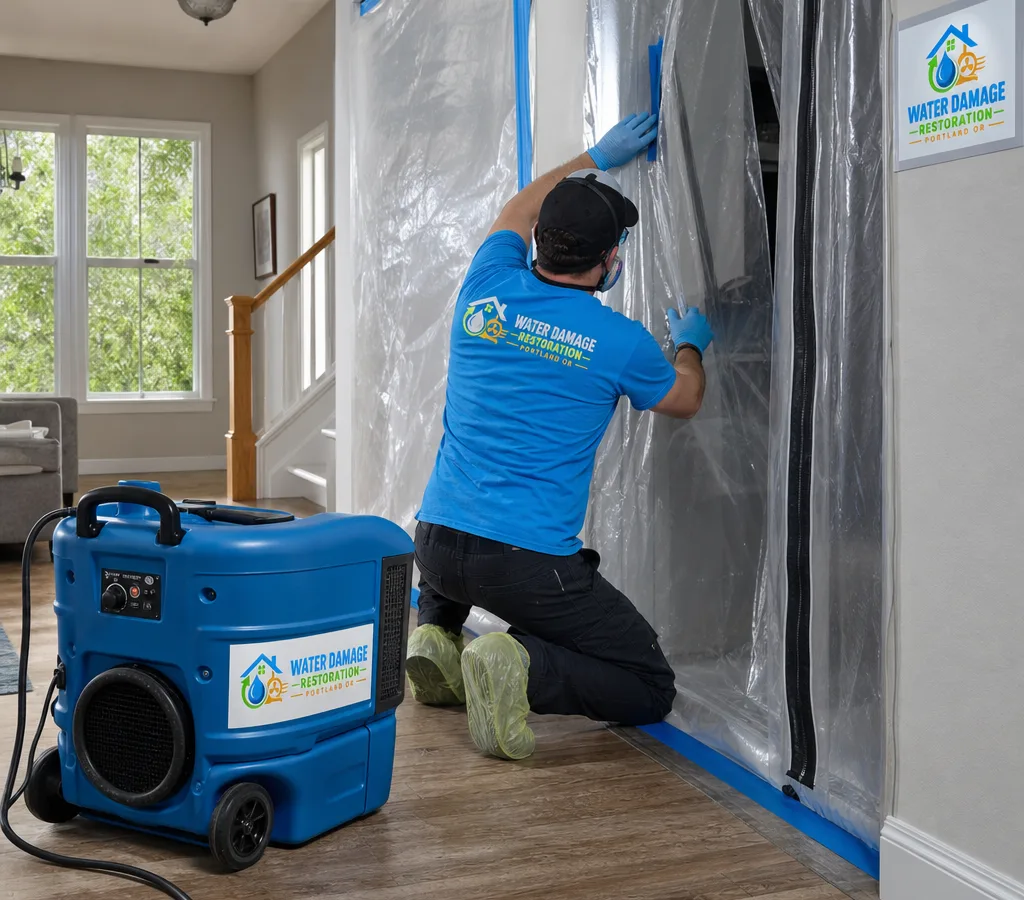
For active growth or demolition, we use plastic barriers and HEPA-filtered negative air to keep spores from spreading into hallways, HVAC returns, and other rooms.
Air scrubbing and HEPA vacuuming target fine particles that ordinary shop vacs and household filters cannot capture.
Drywall, insulation, carpet pad, and other porous materials often cannot be reliably remediated once mold has colonized them. When removal is necessary, we explain why and how far it needs to go.
Mold comes back when moisture stays. We document what caused it and recommend practical fixes such as ventilation improvements, targeted sealing, or plumbing repairs coordination.
We keep work areas controlled, protect floors and pathways, and leave the space clean so you are not living with dust and debris after remediation.
Portland housing has a wide mix of older and newer construction, and the way mold shows up often depends on where you live and how the building was built.
In Southeast Portland, many homes have older bathrooms and laundry areas where ventilation was never designed for today's moisture loads. Mold commonly appears on ceilings, around fan housings, and behind baseboards near tubs and showers.
In Northeast Portland, finished basements and daylight basements can trap humidity if insulation and air sealing are uneven, especially when storage blocks airflow along exterior walls.
Downtown and the Pearl District have more condos and mixed-use buildings where leaks can originate above or beside you. A careful inspection matters so the remediation plan matches the actual source and affected boundaries.
No matter the neighborhood, the goal is the same: remove contaminated material where needed, clean remaining structure, and address the conditions that allowed growth. That is what makes mold removal in Portland a lasting fix instead of a repeating problem.
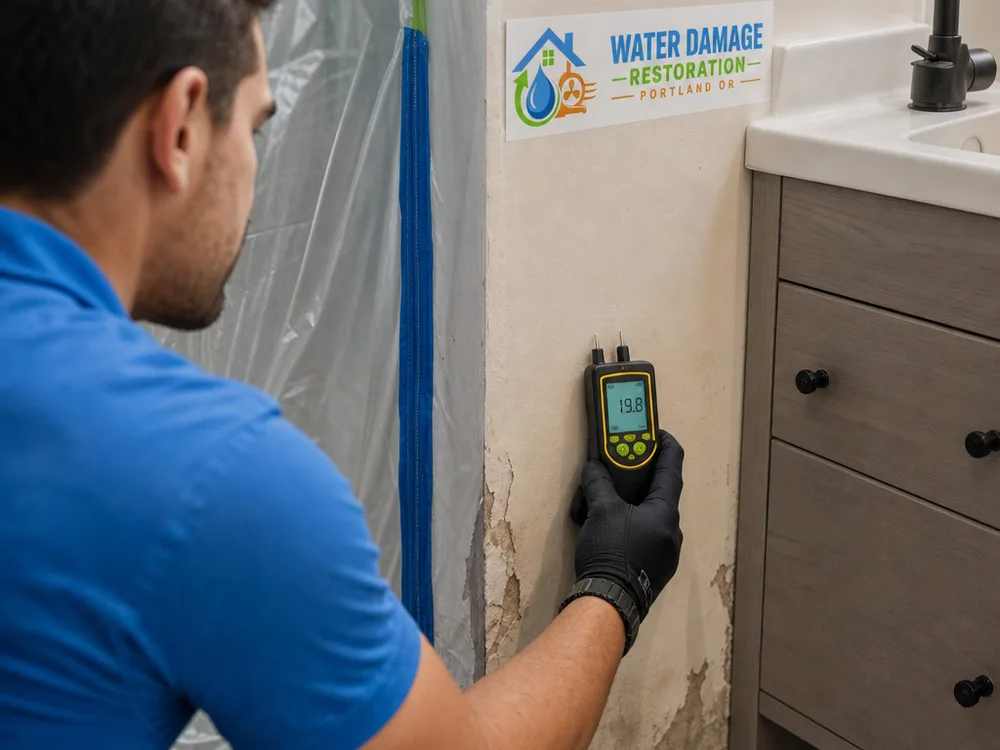
We start by locating where moisture is coming from and mapping the impacted area. Expect targeted checks under sinks, behind toilets, around window frames, near exterior corners, and at basement rim joists.
We protect nearby rooms and set containment appropriate to the conditions. When needed, we establish negative air with HEPA filtration to reduce cross-contamination while work is underway.
Porous materials that cannot be reliably cleaned are removed in a controlled way and bagged out. We keep demolition limited to what is necessary to reach clean, dry structure.
We clean remaining structural surfaces and contents as appropriate, then HEPA vacuum and detail the space. Where it fits the material and condition, antimicrobial products are included in the remediation plan.
If moisture is still present, we recommend the right drying approach. Remediation without drying is incomplete because damp materials can restart growth even after cleaning.
You get a clear summary of what was found, removed, and cleaned, plus what to fix or monitor next. If you want post-work testing, we explain how to coordinate it with an independent third party.
Mold removal in Portland typically ranges from about $900 to $3,500 for smaller to mid-size projects, while larger or multi-room remediation with significant demolition and containment can run $4,000 to $12,000+.
Your final price mainly depends on the size of the affected area, whether mold is in wall or ceiling cavities, how much porous material must be removed, access such as tight crawlspaces or occupied condos, and whether drying and equipment time are required. The exact scope and cost are confirmed after an on-site inspection.
“We found mold behind a bathroom vanity after a slow leak. The team set up containment, explained what had to come out, and kept the rest of the house clean while they worked. The prevention tips were the most helpful part.”
“Our basement smelled musty and we kept wiping the same spots. The inspection showed dampness along an exterior wall and insulation that needed to be removed. After remediation and drying, the odor finally went away.”
Sometimes, but only when the mold is truly limited to the surface and the drywall is dry and structurally sound. If moisture has been present long enough for growth inside the paper facing or wall cavity, removal of the affected drywall and often insulation is usually the reliable option because those porous materials do not clean well once colonized.
Most small mold removal jobs take 1 to 3 days on site, and larger projects take longer when containment, demolition, and drying are needed. Timeline depends on how far the mold extends into cavities and how quickly materials can be dried to an acceptable moisture level after the source is corrected.
Often yes for limited areas when proper containment and HEPA filtration are used, but it depends on the location and sensitivity of occupants. If the affected area is in a main living space, involves extensive demolition, or anyone has respiratory concerns, we will talk through room separation, temporary relocation options, and how to keep pathways and HVAC returns protected.
Yes, and the approach changes by area. Crawlspaces often require careful access planning and debris control, attics often involve ventilation and roof-leak considerations, and basements frequently need humidity management along exterior walls. The inspection determines what is practical and necessary to reach clean, dry structure.
We can help you understand when testing is useful, but many clients choose to use an independent third-party inspector for sampling to avoid conflicts of interest. The most important part is a clear scope tied to visible conditions and moisture findings, plus containment and proper cleaning methods.
Mold returns when moisture returns, even after a thorough cleanup. Common reasons include bathroom fans that do not vent well, slow plumbing leaks, rain intrusion around windows, damp basements, or HVAC issues that spread humidity. A prevention plan that addresses the moisture source is what keeps mold removal from turning into a repeat visit.
Tell us what you are seeing—odor, staining, a recent leak, or visible growth—and we will schedule an inspection, outline the scope, and explain the safest path to a clean, dry home in Portland.