Clear scope before demo starts
You get a written plan that outlines what areas are impacted, what gets removed, what gets cleaned, and what needs drying so decisions are made upfront.
Serving Portland, Oregon & surrounding areas
24/7 Emergency Response
If you smell musty odors, see staining, or have had a leak, we inspect the source, contain the work area, remove contaminated materials when needed, and dry the structure so the mold problem does not keep coming back.
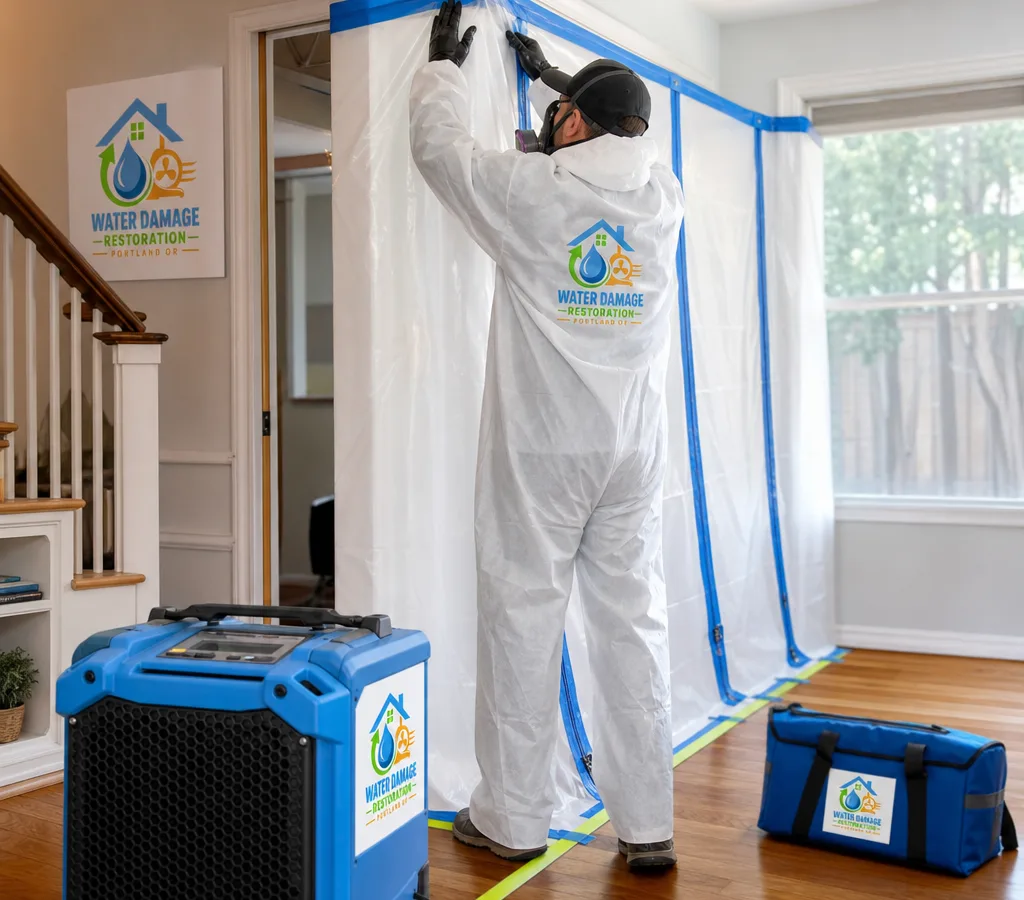
Portland mold remediation is more than wiping visible growth off a wall. Mold shows up where moisture lingers, so a real remediation plan starts by finding where water is getting in or where humidity is staying trapped. Our team at Water Damage Restoration Portland OR focuses on removing affected materials safely, cleaning remaining surfaces properly, and drying the building so conditions that supported growth are addressed.
In Portland, the most common calls we see are tied to wet basements and crawl spaces, plumbing leaks that soaked framing behind drywall, and ventilation issues in bathrooms or laundry areas where moist air never fully leaves the home. Older housing stock and finished basements can hide damage for weeks, which is why a clear inspection and scope matters before anyone starts tearing out walls.
If mold is connected to a recent leak or flooding, it often makes sense to coordinate remediation with water damage restoration in Portland so the drying and moisture verification are handled as part of the same plan.
A proper mold remediation job is built around containment, removal, cleaning, and drying. The details depend on where growth is, what materials are affected, and how air moves through the building.
Typical scope items include:
We keep the scope practical: remove what must be removed, clean what can be cleaned, and document what was done so you can move forward with confidence.
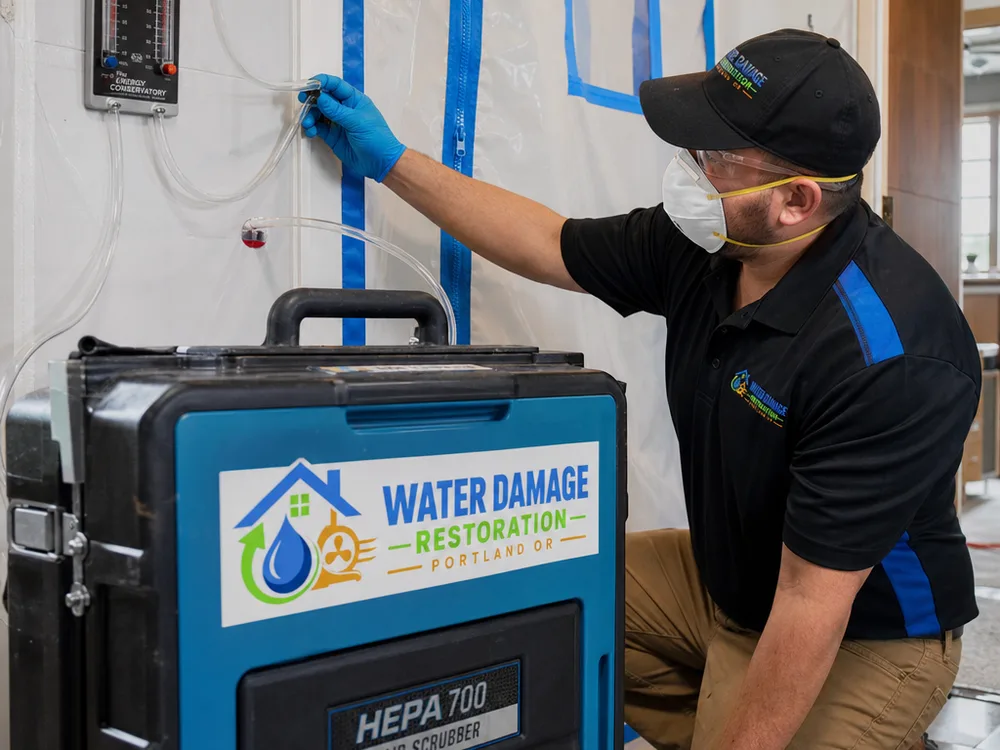
The work is organized around clear decisions, controlled conditions, and the moisture issue behind the mold.
Request Emergency ServiceYou get a written plan that outlines what areas are impacted, what gets removed, what gets cleaned, and what needs drying so decisions are made upfront.
We set barriers and filtration early, especially in occupied homes, to reduce spread to living areas, HVAC returns, and adjacent rooms.
We look for the conditions that allowed growth: slow plumbing leaks, roof or flashing intrusion, crawl space humidity, or poor bathroom ventilation.
We plan access, staging, and debris removal to limit disruption, and we communicate what rooms should be avoided while work is active.
For offices and retail spaces, we can phase work, protect customer areas, and prioritize quick dry-out to reduce downtime.
Mold remediation in Portland, OR often starts in the parts of the house that stay cool and damp. A few patterns come up again and again:
Neighborhood to neighborhood, building styles change what we look for. In older parts of town like Sellwood and St. Johns, we often see moisture impacts in older framing and plaster assemblies where leaks were patched but the cavity was never properly dried. In the Pearl District and South Waterfront, tighter building envelopes make ventilation and humidity control especially important, since moist air has fewer ways to escape if mechanical systems are not set up correctly.
We identify affected areas, likely moisture sources, and how air moves through the structure. Then we outline what needs containment and what materials are candidates for removal versus cleaning.
We isolate the work zone with barriers and, when appropriate, establish negative air with HEPA filtration to keep airborne particles from spreading to clean spaces.
We remove contaminated porous materials where needed, HEPA vacuum remaining surfaces, and perform detailed cleaning of framing and non-porous components within the scope.
We dry structural materials and monitor moisture. The goal is to restore normal moisture conditions so regrowth risk is reduced before any rebuild work begins.
We review what was done, what was removed, and what repairs are next. If a rebuild is required, we can explain what a contractor will need to address to close everything back up correctly.
Mold remediation in Portland typically ranges from about $1,500 to $6,500 for most residential projects, while larger or multi-room contamination with significant demolition can run $8,000 to $20,000+. Small, contained areas (like limited growth in a bathroom wall cavity) usually fall at the lower end, and crawl space or basement projects with heavy removal and extended drying land higher.
Final price depends on affected square footage, how much porous material must be removed, access (tight crawl spaces and finished basements take longer), containment needs, and whether the structure is still wet. Exact cost is confirmed after an on-site inspection and written scope.
You typically need professional remediation when mold is inside wall or ceiling cavities, affecting porous materials, or returning because moisture was never fixed. Small surface spotting on non-porous tile or sealed surfaces may be cleanable, but if there is a musty odor, peeling paint, soft drywall, or a history of leaks, an inspection is the safer starting point.
Most mold remediation projects take 1 to 3 days of active work, plus drying time that can add several days depending on how wet the structure is. A single contained area may be handled in a day, while crawl spaces, basements, or multi-room projects can take longer due to containment setup, material removal, and moisture verification.
Yes, HEPA filtration is a standard part of controlling airborne particles, and negative air is used when containment needs to be stricter or the affected area is larger. The exact setup depends on where the mold is, how the HVAC returns are located, and whether the building is occupied during the work.
Yes, crawl space mold remediation is common in Portland because moisture can stay trapped under the home. The right approach usually includes removing contaminated debris or insulation when needed, cleaning accessible framing, and addressing the moisture driver, which may include drying, dehumidification, and correcting drainage or ventilation issues.
Mold can return if moisture returns, so the best prevention is correcting the source and confirming the structure is dry before rebuilding. If a roof leak, plumbing leak, or chronic humidity issue is still present, even a well-cleaned area can re-develop growth over time.
It depends on the location and scale of the work, but many projects can be completed while you stay elsewhere in the home. If remediation involves large containment zones, strong odors from wet materials, or areas tied to bedrooms or main living spaces, it may be more comfortable to be out during active removal and cleaning.
Yes, mold often follows water events when materials stayed wet long enough, and the plan should include both removal and drying. In those situations, it helps to coordinate remediation with proper moisture measurement and structural drying so repairs do not trap damp materials behind new drywall or flooring.
Tell us what you're seeing and what areas are affected. We'll schedule an inspection, explain the scope in plain language, and outline the steps to remove mold, dry the structure, and reduce the chance of it coming back.