A plan for where to test
We choose sampling locations based on airflow, occupancy, visible staining, and moisture readings, not guesswork. That keeps results usable for decisions.
Serving Portland, Oregon & surrounding areas
24/7 Emergency Response
Get clear sampling, accredited lab results, and practical next steps for landlords, buyers, and homeowners dealing with musty odors, past leaks, or visible growth.
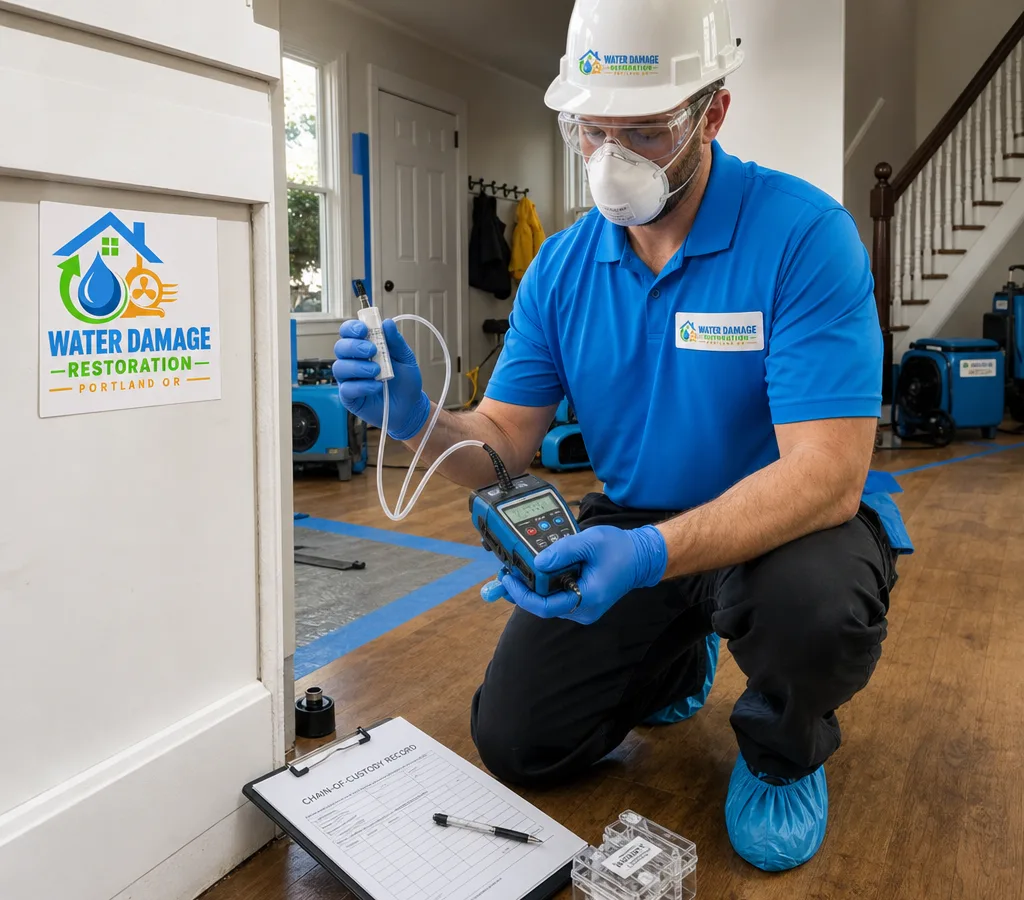
If you are searching for mold testing Portland Oregon, you usually have one of three problems: a persistent musty smell, recent water intrusion, or spots that look like mold but you are not sure. Testing helps answer a simple question: what is in the air or on the surface, and what should happen next.
In Portland, damp seasons and older building assemblies can make moisture problems hard to spot. Crawlspaces, basements, and tightly sealed rooms can hold humidity, and a small plumbing leak behind a wall can keep feeding growth for weeks. A mold test is useful when you need documentation for real estate, landlord-tenant issues, or insurance files; when symptoms or odor do not match what you can see; or when you want to confirm whether a cleanup actually worked.
Testing is not a substitute for fixing moisture. A good inspection pairs sampling with moisture mapping so the results make sense. If you only get a lab report with no context, it is difficult to decide whether you need targeted cleaning, containment, or broader remediation.
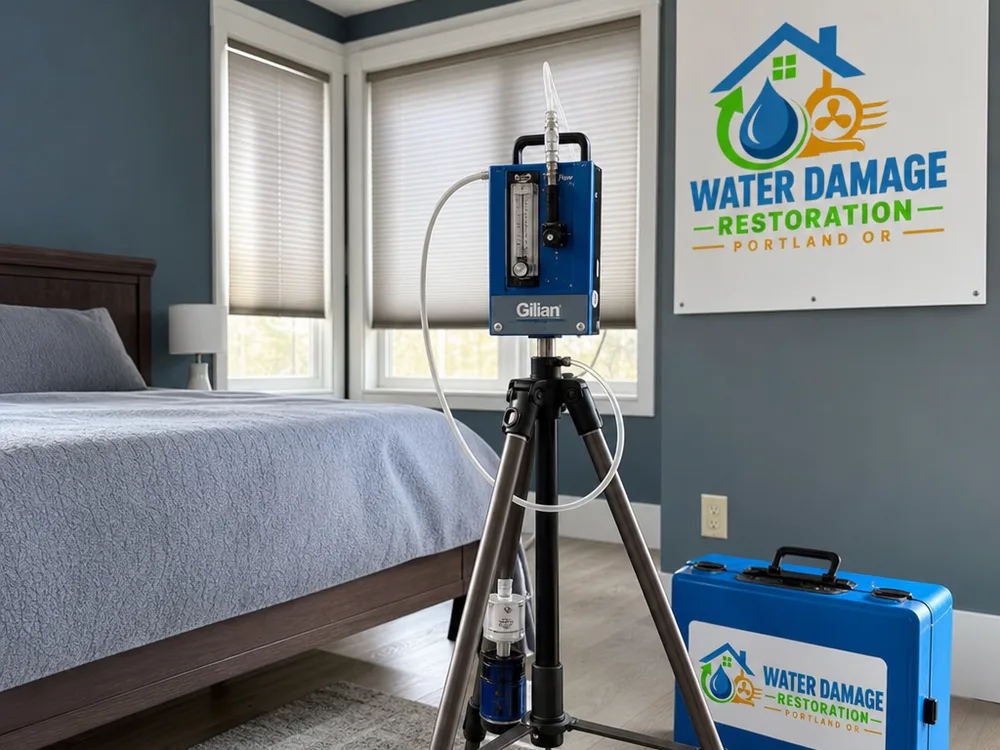
A reliable mold test Portland appointment starts with the building, not the cassette. We look for the conditions that let mold grow: moisture, organic material, and time. Then we sample where it matters.
Typical components include:
Sampling methods may include:
You will get written results and straightforward guidance. If the report suggests conditions that warrant remediation, we can explain the scope you would typically need to request from a remediation contractor.
If the concern started with a leak or flooding, it helps to understand the timeline and drying expectations used in restoration work. Our team can also walk through what documentation is usually needed when moisture is still active or recent.
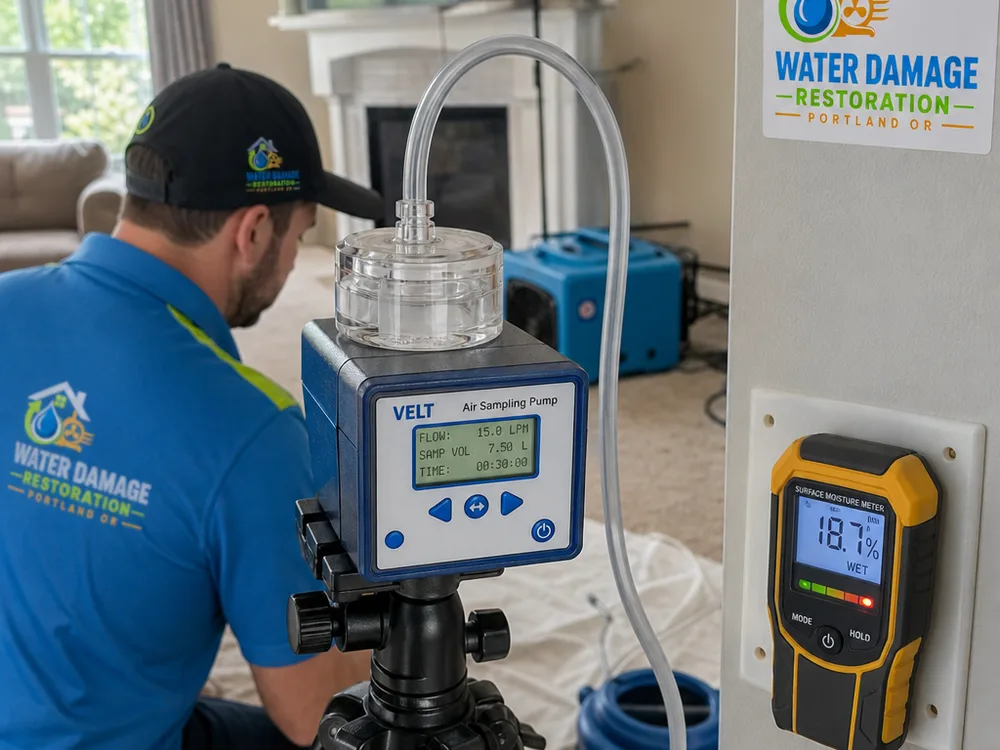
The testing plan, documentation, and explanation work together so you can make an informed decision about the property.
Request Emergency ServiceWe choose sampling locations based on airflow, occupancy, visible staining, and moisture readings, not guesswork. That keeps results usable for decisions.
Lab data is only helpful when it is tied back to room conditions. We explain what is likely normal background versus what points to an indoor source.
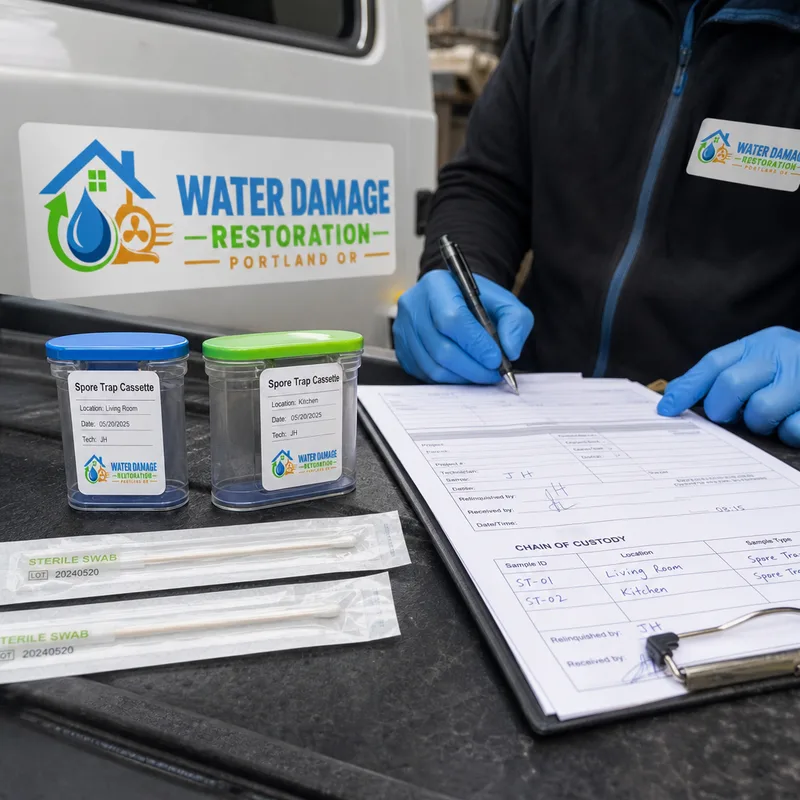
Clear sample labels, chain of custody, and a written summary help with real estate timelines, tenant-landlord communication, and project planning.
Mold follows moisture. We focus on identifying wet materials and likely sources so the next step is fixing the cause, not repeating cleanup.
If remediation is indicated, we outline the common containment and cleaning approaches to ask for, and when a post-remediation verification test makes sense.
The same mold species can show up anywhere, but the building conditions that create problems in Portland tend to repeat.
Crawlspaces and basements: Moist soil vapor and limited ventilation can keep framing and subfloor materials damp. If you smell mustiness on the first floor but do not see anything, sampling and moisture checks below can clarify whether the crawlspace is contributing.
Bathrooms and laundry areas: Intermittent moisture from showers, exhaust-fan issues, and small supply-line leaks can drive growth behind cabinets or around drywall seams. Surface sampling can confirm whether a discoloration is fungal growth or simple staining.
Attics and roof transitions: Small roof leaks or condensation around vents can wet sheathing. When a ceiling stain is old, testing helps determine whether the problem is historic or still active.
Real estate due diligence: Buyers and sellers often need a neutral, documented snapshot. A targeted mold test is more useful than blanket sampling, so we focus on areas flagged by disclosures, odor, or evidence of past water.
After cleanup: If a remediation contractor has removed materials or cleaned a space, a post-remediation verification test can confirm that the indoor environment is back to a normal baseline relative to a control sample.
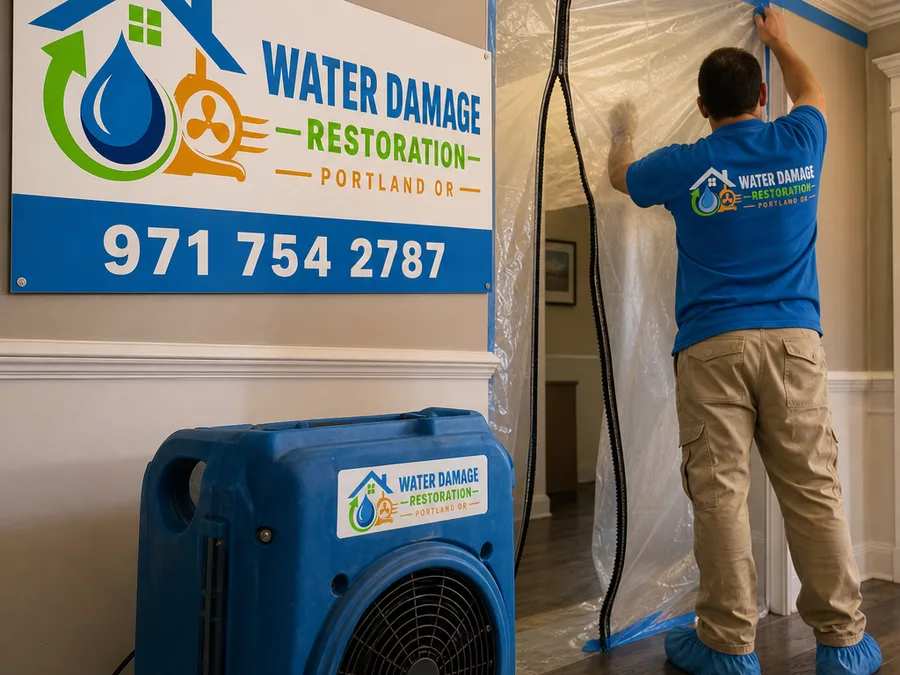
If you are dealing with lingering dampness or the original leak was not fully dried, the priorities may shift to source control and drying before further sampling. For burst pipes, appliance leaks, or wet building materials, water damage restoration can stabilize conditions so mold testing reflects the real end state.
We ask what you are trying to answer: confirm suspected mold, document conditions for a transaction, identify an odor source, or verify a cleanup. The goal determines the sampling plan.
We inspect the concern area and check for wet materials and pathways, including plumbing penetrations, window corners, and exterior wall intersections.
We collect air and/or surface samples using a defined protocol and label everything clearly. Air sampling typically includes an indoor sample and an outdoor or control reference.
Samples go to a qualified lab for analysis. Your report summarizes the findings and explains what they mean in plain language.
We outline practical options based on results: fix moisture sources, use targeted cleaning, arrange professional remediation with containment, or plan a follow-up verification test.
Mold testing in Portland typically ranges from about $300 to $900+, depending on the number of samples, the size and layout of the home, and whether you need a written report for a transaction or dispute. A straightforward visit with 1 to 2 air samples and basic moisture checks is usually on the lower end, while multi-room testing with several air and surface samples lands higher.
Price changes with access to crawlspaces or attics, urgency, the number of areas sampled, and whether conditions require extra documentation. The exact cost is confirmed after we review your goals and the testing plan for the property.
Most lab results are available in 2 to 4 business days, and scheduling can often be arranged quickly depending on demand and access to the property. If you are in a real estate window, tell us your deadline so we can choose a sampling plan that supports the timeline.
Yes. A lab can identify whether spores consistent with Stachybotrys and related groups are present in air or surface samples, but the more important question is whether there is an ongoing moisture source supporting growth. If building materials are wet, the correct next step is drying and fixing the source, then addressing affected materials under containment if needed.
Neither is automatically better; they answer different questions. Air samples help compare indoor conditions to a control sample and can support an odor or exposure concern, while surface samples help confirm whether a visible spot is fungal growth. Many investigations in Portland use a combination when there is both a suspect surface and a question about room air.
Do not scrub or bleach the suspect area before testing because it can remove evidence and skew results. It is fine to keep the space tidy for access. If you must address an active leak for safety, do that and let us know what changed so we can interpret findings correctly.
Yes, when there is safe access. We evaluate entry conditions first, then collect moisture readings and samples as appropriate. If access is limited or conditions are unsafe, we explain alternatives, such as sampling adjacent living areas to help infer whether the space is influencing indoor air.
Testing can indicate whether there is likely an indoor source and what type of environment is contributing, but it does not always pinpoint the exact cavity or hidden location by itself. That is why we pair sampling with inspection and moisture mapping. If results suggest a hidden source, the next step is targeted investigation, not random demolition.
Tell us what you are seeing or smelling and where it is happening. We will recommend a sampling plan, explain what the lab results can and cannot prove, and give you next steps you can act on in Portland.